
Through guided, hands-on project work, the SONiC Mentorship Program helps new contributors gain practical experience working on real-world open source infrastructure.
In this spotlight, we speak with Sreesh Srinivasan, an undergraduate Data Science student at UC Berkeley, about his work improving test coverage for SONiC’s multi-ASIC T1 and T2 environments and strengthening the project’s CI/CD reliability.
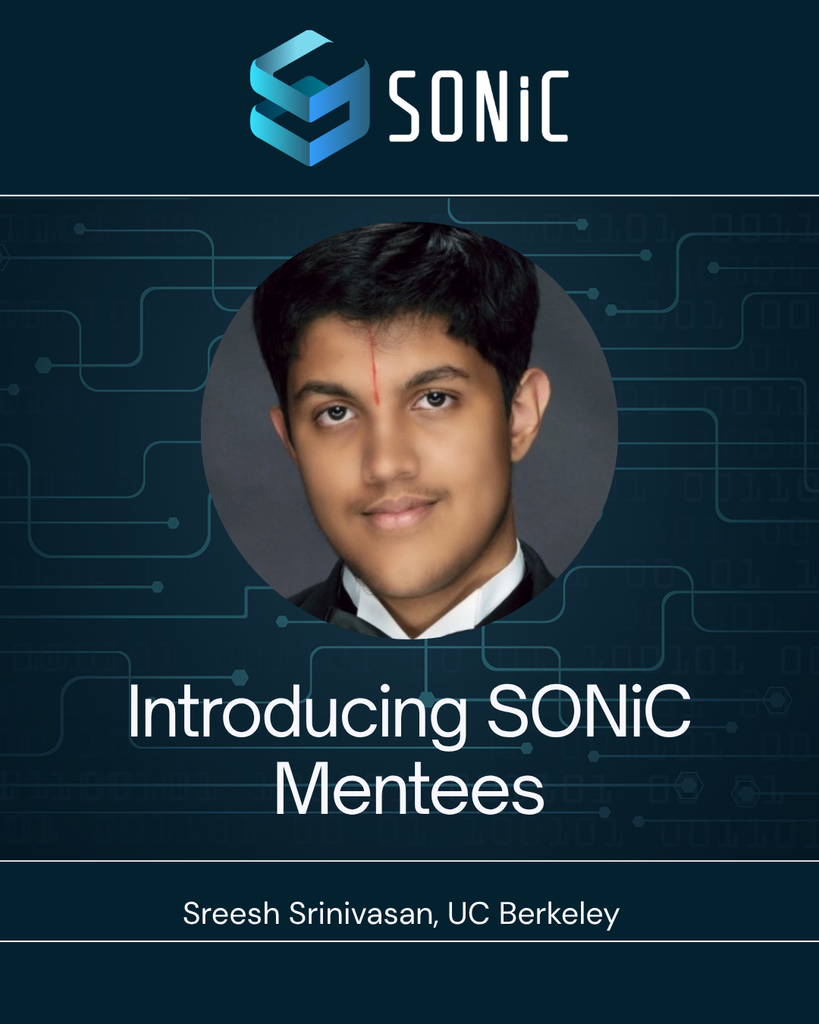
About the Mentee
Sreesh is an undergraduate Data Science student at UC Berkeley who joined the SONiC Foundation Mentorship Program to gain experience in a real-world engineering environment.
He was particularly interested in learning more about software engineering, network operating systems, and complex infrastructure beyond what he had previously worked with.
Q: What project did you work on, and why is it important to SONiC?
My project focused on improving the multi-ASIC T1 and T2 PR checkers used in SONiC’s automated CI/CD pipelines.
SONiC relies on continuous integration and testing to help maintain code quality, but the existing multi-ASIC T1 and T2 PR checkers had lower test coverage than some of the T0 and T1 checkers.
Some legacy test cases had also not been properly adapted for virtual multi-ASIC T1 and T2 emulators. As a result, SONiC images for these platforms were more susceptible to regressions during development.
Improving reliability for these environments is important because multi-ASIC architectures are used in modern data centers to support high-bandwidth traffic and routing demands.
Q: What were your main project goals?
The primary objective was to increase automated test coverage by fixing test cases that were failing or incompatible with the multi-ASIC T1 and T2 PR checkers.
I also wanted to use the mentorship as an opportunity to understand how engineers work on large-scale projects. That meant learning more about SONiC’s architecture, understanding how different software components interact, and becoming comfortable contributing within a production network operating system.
Q: What were your main technical contributions?
During the program, I worked in the sonic-mgmt and sonic-buildimage repositories.
I fixed 10 test cases that had previously been failing or were incompatible with the multi-ASIC environments. This increased automated test coverage for these platforms and helped improve the reliability of SONiC’s CI/CD pipeline.
By getting more tests running successfully in the multi-ASIC T1 and T2 environments, the work also helps reduce the likelihood of regressions reaching the broader codebase.
Q: What did you learn during the mentorship?
When I started the program, my knowledge of computer networking was limited.
Through hands-on work and guidance from my mentors, I learned more about core networking concepts, including BGP and the FRR (Free Range Routing) control plane within SONiC.
I also gained practical experience navigating network protocols, working within a production codebase, and going through the open source contribution process, including submitting pull requests.
Q: What impact has this mentorship had, and what are your next steps?
The mentorship gave me a practical introduction to working in a professional open source environment and helped me understand how to work within complex system constraints.
I plan to continue participating in the SONiC community and contributing to open source networking projects. I’m also looking forward to applying the technical and engineering skills I developed during the mentorship throughout a future career in software engineering.
Q: Is there anyone you’d like to acknowledge?
I’d like to thank my mentors, Changrong Wu and Rita Hui, for their guidance throughout the project. They helped explain SONiC’s system architecture and supported me as I developed my engineering skills.
I’d also like to thank Evan Harrison, the Linux Foundation, and the SONiC Foundation for organizing and supporting the mentorship program.
Get Involved
Interested in contributing to SONiC? Join the community and get involved through the SONiC wiki, mailing lists, working groups, and mentorship opportunities.